



Advocacy

OEA

Part of the mission of the Ohio Education Association is advocating for members and the learners they serve. A vital part of this advocacy is involvement in public policy decisions. This link to the OEA website is where you can learn about current issues affecting public education; the importance of becoming involved; and how to contact your elected representatives to make your voice heard. You may be required to log in to see certain political action content.

PEA can provide a limited number of substitute teachers to members attending lobby days in Columbus as well as reimbursement of the mileage and lunch expense for the day.  Contact the PEA office if you would like to attend as appointments with legislators are necessary as well as coordination of rides and substitutes. No experience is necsssary as OEA provides a short orientation and training session the morning of lobby day prior to meeting with the legislators.

Ohio Education Association

7530 Lucerne Dr., Suite 100
Middleburg Heights, OH 44130

Phone 440-243-6030


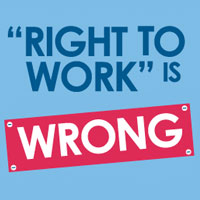
Things You Can Do to Save Collective Bargaining for Ohio Public Employees

Public employee collective bargaining rights are under attack in Ohio as never before. Here are ten things you can do to help preserve these rights:

   1. Encourage your friends and family to Vote NO on Issue 2

   2. Write a letter to the editor of a newspaper near you

   3.  Participate in local No on Issue 2 activities

OEA Legislative Watch


October STRS Board News
Oct. 21, 2011

Despite Strong Investment Returns, Annual Actuarial Valuation Underscores Need for Pension Plan Adjustments

At its October meeting, the State Teachers Retirement Board received the preliminary annual actuarial valuation report prepared by its actuarial consultant, PricewaterhouseCoopers (PwC). The report provides a "snapshot" of the actuarial position of the retirement fund as of July 1, 2011. Even though the system reaped its strongest investment return in nearly three decades during fiscal year 2011, the funding period for the pension fund remains "infinite," and the funded ratio declined slightly from 59.1% to 58.8%. The fund experienced a small actuarial gain of about $181 million during the fiscal year.
 
While the positive investment return for fiscal year 2011 generated a gain, STRS Ohio uses a common accounting and actuarial technique called "smoothing" to spread market volatility over four-year periods. This method helps pension funds recognize investment returns for a given year over a four-year window rather than a one-year "spike." The smoothing technique is more apparent when the returns are especially high (as they were in 2011), or unusually low (as they were in 2009). Some of the significant investment losses from fiscal year 2009 are still being absorbed into this year's valuation, which is part of the reason for the overall decline in funded ratio. The pension fund has a net $5.5 billion in unrecognized gains being deferred to future years.
 
Other significant factors in this year's valuation included:

• A net gain for the system in individual salary increases ­ these increases were smaller than expected.
• Net losses for the system in retiree mortality ­ retirees are living longer than expected and collecting benefits for a longer period of time.
• A net loss for the system in retirements/terminations/withdrawals ­ the system saw a greater number of retirements than expected.
The results of this year's actuarial valuation reiterate the need for pension reform and implementation of the changes the Retirement Board proposed to strengthen the financial condition of the retirement system.
 
CEM Benchmarking Gives STRS Ohio High Marks for Member Service
CEM Benchmarking, a leading global research and benchmarking company, reported the results of its annual pension administration benchmarking report for fiscal year 2010 at the October Retirement Board Meeting. CEM has used peer comparative analysis to measure the performance of public pension plans since 1998, and STRS Ohio has consistently scored in the top quartile of CEM's universe for service. This year's results again recognize STRS Ohio as above the peer median for total service, while noting that the system's total cost is also above the peer average (but below the average of all 78 participating private and public retirement systems from around the world). The report noted that STRS Ohio's costs per member decreased by 2.7% annually between 2007 and 2010, while the average cost of its peers increased by 2.0%.
 
One key takeaway from the report is that there is a global shift to online service and related savings. STRS Ohio has been aware of this shift and is currently developing an online Service Retirement Application to make the retirement process easier for members and more efficient for the retirement system. STRS Ohio will continue to enhance its website and to review other internal processes to identify opportunities to gain efficiency.
 
Other STRS Ohio News

ORSC Scores Proposals for Pension Plan Adviser; Firms to Present to Council Nov. 16
A subcommittee of the Ohio Retirement Study Council (ORSC) met Oct. 11 to score six proposals that were submitted in response to a request for proposals issued by the Council. The subcommittee, chaired by Rep. Kirk Schuring (R-Canton), also includes Rep. Dan Ramos (D-Lorain) and Seth Morgan, a gubernatorial appointee.
 
Categories included in the scoring were: management summary, vendor capabilities and references, staff qualifications, resources, methodology, timeline, additional information about services, glossary and cost information. The Hay Group received the highest score ­ a 46 out of a possible 50 points. The combined proposal from Pension Trustee Advisors/KMS Actuaries came in at 43 points. Two firms, The Segal Company and Milliman both scored 37 points. Rounding out the bottom with 30 and 26 points, respectively, were Bolton Partners and Deloitte.
 
The results of the scoring were accepted by the full Council at its Oct. 13 meeting. On Nov. 16, the six bidding firms are expected to make presentations to the Council. Awarding of the contract will likely happen after the November meeting.
 
STRS Ohio Receives Additional ERRP Payments
After a lengthy quality assurance review by the U.S. Department of Health and Human Services (HHS), STRS Ohio received $9.3 million on Sept. 21 for a 2011 payment from the Early Retiree Reimbursement Program (ERRP). This brings the system's total ERRP funds received to $29.7 million. In late September, STRS Ohio staff submitted four new payment requests: two for the 2010 self-insured plans and two for the fully insured plans for 2010 and 2011. The total of the four requested payments is $35.9 million. Staff expects these payments to be subjected to HHS quality assurance review; so, it is unclear if or when STRS Ohio will receive any reimbursement.
 
Health Care Services staff is currently working with consultants to plan the timing of fourth quarter ERRP submissions to HHS, as it is unknown at this time when the federal ERRP funds will run out.
 
--------------------------------------------------------------------------------
The STRS Ohio eUPDATE is designed solely to provide timely and accurate news and information about legislation, benefits and other issues affecting the STRS Ohio membership.
 
To view past eUPDATEs, go to https://www.strsoh.org/past_news_emails/main.html.
 
If you wish to comment on a topic, please either email contactus@strsoh.org or call the Member Services Center toll-free at 1-888-227-7877.
 

May STRS Board News


Contributing Member Taiyia L. Hayden Wins Board Seat
Taiyia (Tai) L. Hayden was reelected to the State Teachers Retirement Board in the recent election. The term for this seat begins on Sept. 1, 2011, and ends on Aug. 31, 2015.

Pension Legislation on Hold Pending Independent Review
During the May 12, 2011, meeting of the Ohio Retirement Study Council (ORSC), Sen. Keith Faber, who chairs the committee, announced that he is creating a subcommittee to develop a request for proposal for an independent actuary and policy advisor in regard to pension reform issues. This consulting expert will be asked to help the ORSC members analyze the plans the five public pension systems have developed to strengthen the solvency of their pension funds and other potential retirement-related changes. Faber noted he wants someone who can advise on reform trends in other states and the private sector. Through media reports, he indicated the Senate is not likely to proceed with any pension legislation until this review is completed. It is expected that this process will take pension reform discussions into the fall. The members of the ORSC subcommittee, which will be chaired by Rep. Kirk Schuring, are Sen. Scott Oelslager, Rep. Dan Ramos and Lora Miller, who was recently appointed by the governor to the ORSC.

Faber has also been quoted as saying the Senate will be giving strong consideration to restoring the contribution shift (12% and 12% versus 10% and 14% from members and employers, respectively) in the budget bill, which is Substitute House Bill 153. STRS Ohio Executive Director Michael Nehf testified at the May 12 meeting of the Senate Finance Committee, which is holding hearings on the bill, reiterating that any discussion of contributions should be held within the context of the pension reform package proposed by the five Ohio statewide public pension systems. This would help allow any proposed changes to STRS Ohio’s plan to be discussed and their actuarial impact analyzed in conjunction with the other plan components.

During the May ORSC meeting, STRS Ohio also presented its proposed operating and capital budgets for fiscal year 2012. There were no recommendations for changes from the council members.

One final note regarding the ORSC: The last vacancy on the nine-member panel has been filled by the governor, who named former state Rep. Seth Morgan to the council.

Retirement Board Continues Discussion About 2012 Health Care Program
From March through June each year, STRS Ohio staff discusses proposed premiums and any health care plan changes for the upcoming calendar year with the Retirement Board. In April, the board agreed to phase-in reductions over the next four years to the premium subsidy received by benefit recipients enrolled in the health care plans. The reduction in subsidy will increase premiums more than the usual increase for medical trend. During the May meeting, the board reviewed preliminary premiums for all plans for 2012; however, the board will not be asked to approve final premiums until the June board meeting. This allows staff to review the claims experience and trends for the first three months of 2011 before making final recommendations.

In calendar year 2012, STRS Ohio health care program participants who are eligible for Medicare Part B only will be able to enroll in the Aetna Medicare Plan (PPO) or the Medical Mutual Basic Plan (or one of the regional health care plans, if applicable). About 7,800 Medicare Part B only enrollees will benefit from the lower monthly premiums provided by the Aetna Medicare Plan (PPO). Previously, these individuals had to choose between the Medical Mutual Plus Plan, Medical Mutual Basic Plan or a regional plan.

The Aetna Medicare Plan (PPO) offers a number of enhanced benefits for its enrollees, including: a $1,500 maximum in out-of-pocket costs that includes the $500 deductible and all medical copayments and coinsurance; low office copayments of $15; ability to see virtually any physician/provider who accepts Medicare; and gym memberships at participating fitness centers. Additional information will be provided later this year through the STRS Ohio Web site, newsletters and health care open-enrollment materials.

Retirement Webcasts Prove Successful
More than 60 individuals have participated in the Retirement Countdown 2011 webcasts that began on May 11. The Member Education staff is offering these weekly to help members who have already met with a benefits counselor and have current retirement estimates, but need help completing the necessary paperwork for retirement this summer. These webcasts will be offered every Wednesday through June 29 from 4:30–5:30 p.m. Registration can be taken up to 4 p.m. on the day of the session. Registration information is posted on the STRS Ohio Web site under the “Counseling & Seminars” tab on the home page.

STRS Ohio Receives Certificate of Achievement
STRS Ohio’s Comprehensive Annual Financial Report for the fiscal year ended June 30, 2010, has received the Certificate of Achievement for Excellence in Financial Reporting. This is the 21st consecutive year that STRS Ohio has received this award, which is given by the Government Finance Officers Association (GFOA).

External Auditor Selected
Clifton Gunderson has been selected to audit STRS Ohio financial statements for fiscal years 2011–2015. Clifton Gunderson was selected from four firms interested in performing the external audit work; the firm’s pension experience played a key role in its selection. The first-year, fixed-fee bid of $101,500 is 12% less than the 2010 fee.

To view past issued of Board News, go to
http://www.strsoh.org/past_news_e-mails/main.html.


MARCH STRS BOARD NEWS

PENSION PLANS DISCUSSED IN HOUSE AND SENATE COMMITTEES AND NOW INCLUDED IN PROPOSED STATE BUDGET
Legislation based on plans forwarded to the General Assembly from the five statewide public pension plans has been the focus of hearings in a subcommittee in the Ohio House of Representatives. House Bill 69, sponsored by Rep. Lynn Wachtmann, was assigned to the Health and Aging Subcommittee on Retirement and Pensions after its first hearing. Wachtmann, who is chair of the House Health and Aging Committee, sent the legislation to the subcommittee that is pursuing an aggressive hearing schedule under the direction of Chair Kirk Schuring.

To date, all five systems have presented testimony on the board-approved changes to their respective plans. In the case of STRS Ohio, the language in the current bill actually refers to the plan adopted by the Retirement Board in fall 2009. However, language is expected to be amended with the more recently adopted board recommendations from January 2011. Since the bill's introduction on Feb. 1, nine hearings have been held and an additional five are scheduled.

The pace in the Senate on pension legislation has been slower. Sen. Keith Faber delivered sponsor testimony on Senate Bill 3 on Feb. 24 to the Senate Government Oversight and Reform Committee. The following week, the directors of the five systems provided overviews of their systems for the committee, but did not delve into detail on their respective board plans for long-term sustainability, leaving that for a subsequent committee hearing.

In his testimony, STRS Ohio Executive Director Michael Nehf indicated the system's typical new retiree is age 59 with 30 or more years of service. He said the large majority of members contribute to or receive pensions from STRS Ohio's Defined Benefit Plan. He also said the system isn't in "immediate crisis," but noted that without changes, STRS Ohio would eventually be unable to pay pensions. He explained to the committee that a shift to a defined contribution plan isn't a viable solution, in part, because diverting contributions from new teachers to a different plan would actually cost existing members and employers more to make up for the lost contributions. Regardless of the plan design for the future, the existing unfunded liabilities must be funded. In a follow-up comment, Sen. Bill Seitz, who chairs the committee, said that moving to a defined contribution plan for STRS Ohio or the other systems would be like "trying to put the toothpaste back in the tube."

The committee currently does not have plans to hear S.B. 3 again until later in March as the Legislative Service Commission is in the process of drafting a substitute version of the bill.

Further complicating the current pension reform discussion is a proposal contained in Gov. John Kasich's state budget that would shift employer/employee contributions for the five pension systems. Employers would pay two percent less based on payroll and employees would pay two percent more. Requiring employers to pay less is being recommended as a way to help offset the proposed cutbacks in state funding to state and local governments.

For STRS Ohio, this could mean an increase in member contributions to 12% from the current 10%, and a decrease in employer contributions to 12% from 14%. However, no details have been received as yet regarding this change, including how it would relate to the already proposed 3% increase in member contributions that STRS Ohio included in its January pension reform plan.

It is anticipated that this proposed contribution change and its potential impact on the five systems' respective plans, plus the feasibility of moving public employees into defined contribution plans, will be discussed in the committees and by the Ohio Retirement Study Council (ORSC). This month, Sen. Keith Faber was elected chair of the ORSC, which is the legislative oversight committee for the five pension systems. Wachtmann was elected vice chair.

STRS Ohio members are encouraged to visit the STRS Ohio Web site frequently for updates on pension legislation (https://www.strsoh.org). Hearing schedules and contact information for legislators can also be found there.

BOARD CONTINUES DISCUSSION ABOUT POSSIBLE 2012 HEALTH CARE PROGRAM CHANGES
At its February meeting, the State Teachers Retirement Board further reviewed proposed changes to the STRS Ohio Health Care Program for 2012. The first change would be an adjustment to the premium subsidy methodology by reducing the "years of service" multiplier to 2.1% from the current 2.5%, phased in over 2012 through 2015. For 2012, the multiplier would be 2.4%. As an example: a benefit recipient with 30 or more years of service currently pays 25% of the premium cost; STRS Ohio pays 75% (30 years x 2.5% = 75%). If the multiplier goes to 2.4%, STRS Ohio would pay 72% of the premium cost (30 years x 2.4% = 72%) and the benefit recipient's portion would be 28%. It is anticipated that this change could preserve an additional $20 million in the health care fund in 2012.

The second change the board is considering affects future premiums for the AultCare, Kaiser and Paramount health care plans. Currently, the benefit recipients enrolled in these plans are actually receiving a higher subsidy than the 75% maximum because the plans' costs are cheaper. Under the proposal presented to the board, the subsidies applied to these premiums would be capped at 75% and would be based on the respective plan's full cost. This will result in a lower premium subsidy for the approximately 6,600 benefit recipients enrolled in these plans.

The board will be asked to take a vote on these proposed changes at its April 2011 meeting.

PENSION PROPOSAL ONLINE CALCULATOR AVAILABLE FOR MEMBERS
A new calculator is now on the STRS Ohio Web site to enable members to estimate service retirement benefits based on the Retirement Board's January 2011 pension plan proposal. This calculator is not tied to the member's personal account; however, the member can enter a retirement date, birthdate, years of service at retirement and final average salary and get an estimate that reflects the phase-in period and a close estimate of the actuarial early retirement reductions. The STRS Ohio home page now includes an information box at the top of the page for pension legislation tools that includes the benefit calculator, frequently asked questions and the January proposal.  The new calculator can be accessed at:

https://www.strsoh.org/v3prdcalc/app?service=external/Client:NonSecureCalcPSCOptions

________________________________________________________

To view past Board News, go to
http://www.strsoh.org/past_news_e-mails/main.html.


OEA Retirement Systems Update

Review of the Proposed Changes to STRS Pension Benefits

Below is a review of the major benefit changes recommended by the STRS Board. All of these changes require a change in state law.

STRS: On Thursday, January 27, 2011, the STRS Board voted to make major changes to its proposal to address the long-term solvency of the pension plan. This action was a result of a directive from leaders at the Statehouse. In January, STRS was informed that Governor Kasich would not sign legislation that increased employer contributions or failed to reduce the funding period (the amount of time projected to pay off the plan’s unfunded liabilities) to 30 years or less.

While we understand the timeline and constraints the Board was under, OEA does not support the new plan adopted by the STRS Board. The cuts are too deep and do not offer sufficient flexibility to teachers who are nearing the end of their careers. In addition, the calculations this plan is built upon ignore billions of dollars in investment earnings over the past six months. As an alternative, OEA supports the plan adopted by the STRS Board in October 2010. That plan shares the responsibility for improving system funding more equitably between active employees, retirees and employers.

The components of the plan approved by the STRS Board (January 2011) are as follows:

Member Contributions: Additional 3% employee contribution with a three-year phase-in beginning 7/1/2012, plus language authorizing the Board to increase employee contributions by an additional 1%.

Retirement Eligibility: Beginning 8/1/2015, phase in a change in age and service requirements for full benefits to age 60 with 35 years of service. Retains age 65 with 5 years of service. Beginning on 8/1/2015 early retirements are subject to actuarial reduction. Eligibility changes would be phased in according to the following chart:

Fiscal Year

<2015

2015-2017

2017-2019

2019-2021

2021-2023

2023+


Age

YOS

Age

YOS

Age

YOS

Age

YOS

Age

YOS

Age

YOS

No Reduction

Any

30

56

31

57

32

58

33

59

34

60

35

65

5

65

5

65

5

65

5

65

5

65

5

Reduced

55

25

55

26

55

27

55

28

55

29

55

30

60

5

60

5

60

5

60

5

60

5

60

5

Final Average Salary: Average of the five highest years of salary effective 8/1/2015.

Cost-of-Living Allowance (COLA): Effective 7/1/2012, 2% for all retirees, 60-month deferral for new retirees effective 8/1/2012.

Retirement Formula: 2.2% for all years of service effective 8/1/2015 (35 years of service represents 77% of FAS).

[Home] [News] [Calendar] [Advocacy] [Committees] [Elections] [FAQ] [Foundation] [Contact Us]